
School handed you friends by default: same room, same schedule, same lunch table. Adult life removes that setup, so friendships start only when someone writes the first message. This guide shows you how to make new friends online, from choosing where to look to keeping a chat going.
Why Making Friends Online Works Well for Adults
Adult schedules leave little room for spontaneous plans. Online conversation fits into the gaps. Five minutes is enough to write a message, and the other person can reply when it suits them.
Friendship also takes time. Researcher Jeffrey Hall's 2018 study, How many hours does it take to make a friend?, put numbers on it. About 50 hours together moved people from acquaintances to casual friends, about 90 to friends, and more than 200 to close friends.
The pattern matters more than the exact numbers: friendship builds through repeated contact. Many short conversations over the course of a week have more influence than one long conversation. Writing plays an important role as well, since it allows one to check their message and choose the right words before sending it out.
How to Meet People Online Who Share Your Interests
Where you look matters as much as what you say. Aim for places where people show up on purpose and come back, because a shared topic does half the work for you. Here are three options:
|
Where |
Why it works |
How to start |
|
Hobby forums and interest groups |
People already care about the topic |
Read for a few days, then answer one question |
|
Online courses with discussion boards |
The same people turn up each week |
Introduce yourself in the first thread |
|
Social platforms such as Asiansouls |
Profiles and the newsfeed show interests up front |
Browse profiles and send a Like or a message |
Show Your Interests Before You Say a Word
Your profile does the first bit of talking for you. A few honest lines and a clear photo of your face give people something to respond to. Aim for two to four short sentences, written the way you'd talk.
Interests work as conversation hooks. Someone who reads "baking" or "board games" has an easy first question to ask. Add the topics you'd happily discuss for an hour, and say what you're hoping for, such as friendly conversation about a shared interest.
Keep phone numbers, addresses, and social media links out of your profile, because profiles are public. Share personal details gradually, once a conversation feels comfortable.
Conversation Starters and Icebreaker Questions to Try
Strong openers refer to something on the other person's profile. A message that says only hi is friendly, but it leaves the other person guessing what comes next. Open questions work well because they invite more than a yes or no.
|
If their profile mentions |
Try asking |
|
A hobby, such as gardening |
"What got you started with gardening?" |
|
A trip photo |
"Which trip from your photos stayed with you the most?" |
|
A favorite book or show |
"What should I read or watch next?" |
|
A pet in a photo |
"What's their name, and what's the funniest thing they've done?" |
Asiansouls offers Icebreakers, which are ready-made opening lines you can send to several members at once. A short follow-up that mentions a detail from their profile makes the exchange feel more personal. For a closer look at the tools, see this introduction to the Asiansouls platform.
Deep Questions to Ask Once the Chat Warms Up
Save the bigger questions for after a few easy exchanges. Opening with "What do you want out of life?" feels like proposing a road trip to a stranger.
A few deeper ones to try:
-
What did you learn recently that surprised you?
-
Which small habit has made your days easier?
-
If you had an afternoon entirely to yourself, how would you spend it?
Answer your own question too, since a short reply of your own keeps the chat two-sided. If someone skips a question, move on without comment.
How to Keep a Conversation Going Without Forcing It
A conversation keeps going when each message gives the other person something to pick up. Curiosity and a bit of specificity do most of the work. These steps help:
-
Add one small thing about yourself in each reply (a sentence is enough)
-
End with a question that's easy to answer, and skip the ones that need an essay
-
Keep messages short enough to answer in a minute or two
-
Follow one thread instead of answering every point
-
Switch to a longer, letter-style message when a story doesn't fit in a chat
If a chat stalls, share a small update from your week. Give it a few days before trying again.
How to Be a Good Listener When You're Typing
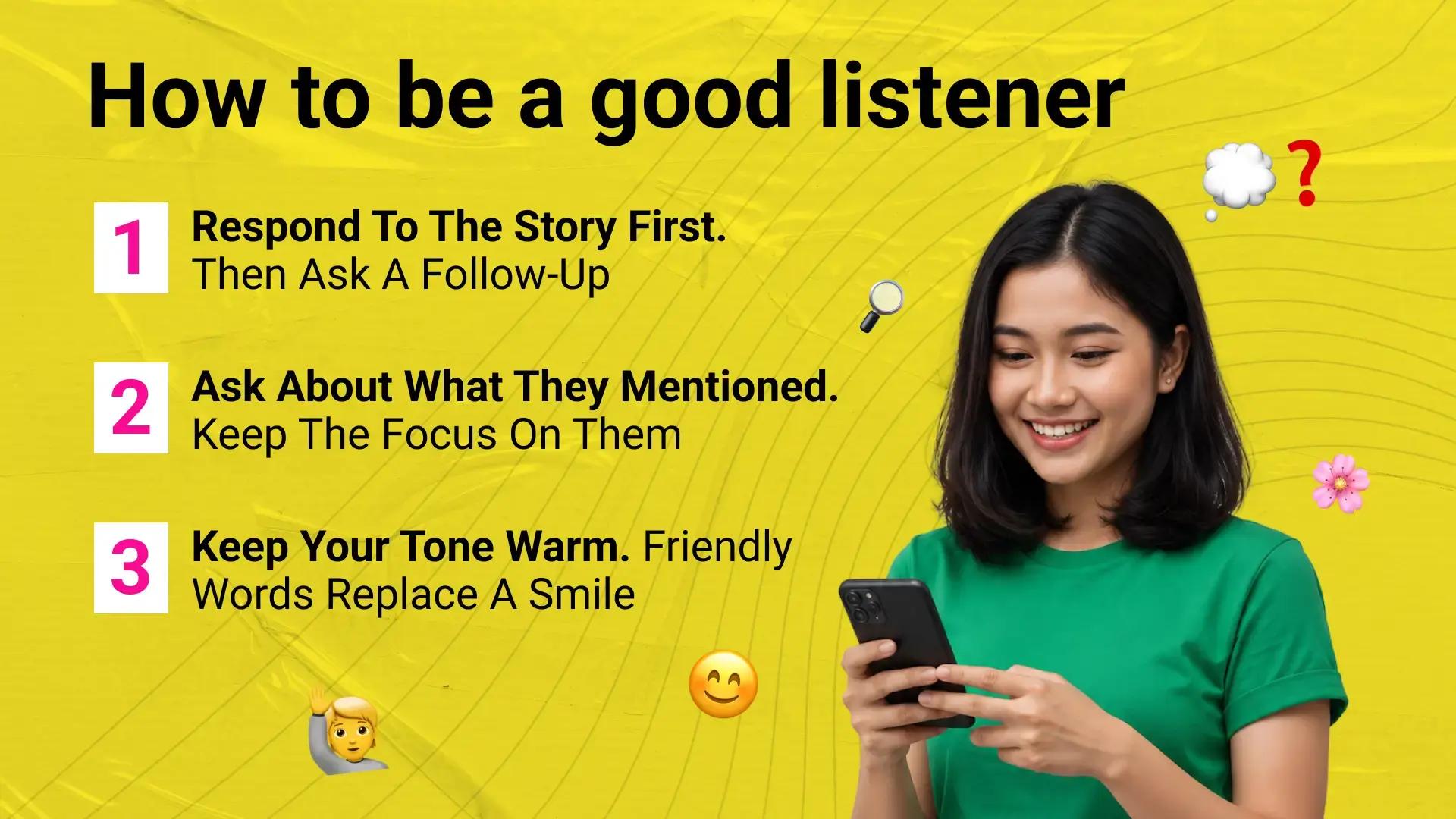
Listening in writing, often called active listening, means showing you've taken in what someone said. There's no nodding or smile, so your words do the work. Refer to a specific detail, and the other person knows you paid attention.
Three habits help:
-
Respond to the story first, then ask a follow-up
-
Ask about what they mentioned and keep the focus on them
-
Keep your tone warm (a friendly word or an exclamation point can stand in for the smile they can't see)
For example, "That sounds like a busy week. How did the presentation go?" works better than jumping to your own news. If something is unclear, ask a quick question instead of guessing.
Read your message once before you send it, because short messages can sound curt and a quick edit softens them. Humor travels poorly in text, so if a joke might read as sharp, save it for later.
Turn a Good Chat Into a Regular Friendship
A good first conversation is only a start. The next step is a rhythm. Consistency beats intensity, so a two-line check-in each week does more than one long message every season.
Remember the small details, since they show you were listening. Ask how the interview went, or how the garden turned out. Mirror their level of detail too: a long, thoughtful message deserves more than one line back.
Suggest the next step in writing. A line such as "Want to pick this up on Friday?" turns a one-off chat into a plan.
Know When to Slow Down or Step Back
Some chats turn into friendships, and some simply fade. Schedules clash, or interests differ, and that's normal. A quiet stretch usually says more about someone's week than about you, so try not to take it personally.
Talking with a few people at once helps too. Not every chat will click, and a handful of open conversations takes the pressure off any single one.
If you'd like to wrap up a chat, say so kindly. A line such as "I've enjoyed talking, and I'm going to step back from this chat. Take care!" is clear and polite. You can also report a message or block a member whenever something feels off.
Make New Friends Online One Message at a Time
Friends matter at any age. They give you someone to share good news with and someone to swap recommendations with. A friend who shares your hobby makes it more fun, and one with a different view can change how you see a problem.
To make new friends online, begin with a clear profile and one specific question. Reply when you've had time to think.
If you're ready to try, create your account on Asiansouls, a social platform for connecting with like-minded people. Registration is free, and some features are paid.
Frequently Asked Questions About Making Friends Online
How do you make friends online as an adult?
Start where people share an interest, such as a hobby forum, an online course with a discussion board, or a social media site. Create a brief profile, ask a question based on what you noticed about them, and be a regular responder.
How long does it take to make a friend?
It depends. According to Jeffrey Hall, friendships develop through spending many hours together, and close friendships take the longest to form. Casual interactions on a weekly or monthly basis are more effective than a single passionate discussion, and the pace of each interaction may vary.
What should you say to someone new online?
Use an element in their profile and frame a question. The interests, pictures, and posts from the newsfeed will serve as conversation starters. A greeting such as "hi" offers little for the recipient to respond to, whereas a question is bound to invite a response. One to two sentences will do.
How do you keep an online friendship going?
Establish a consistent rhythm with short, regular posts, and ask about something they mentioned before. Include some information about yourself to keep the dialogue interactive. Should the discussion falter, all you need is a short follow-up post in a couple of days.